Preventive care · 21-point pass
Garage Door Maintenance & Tune-Up in Toronto
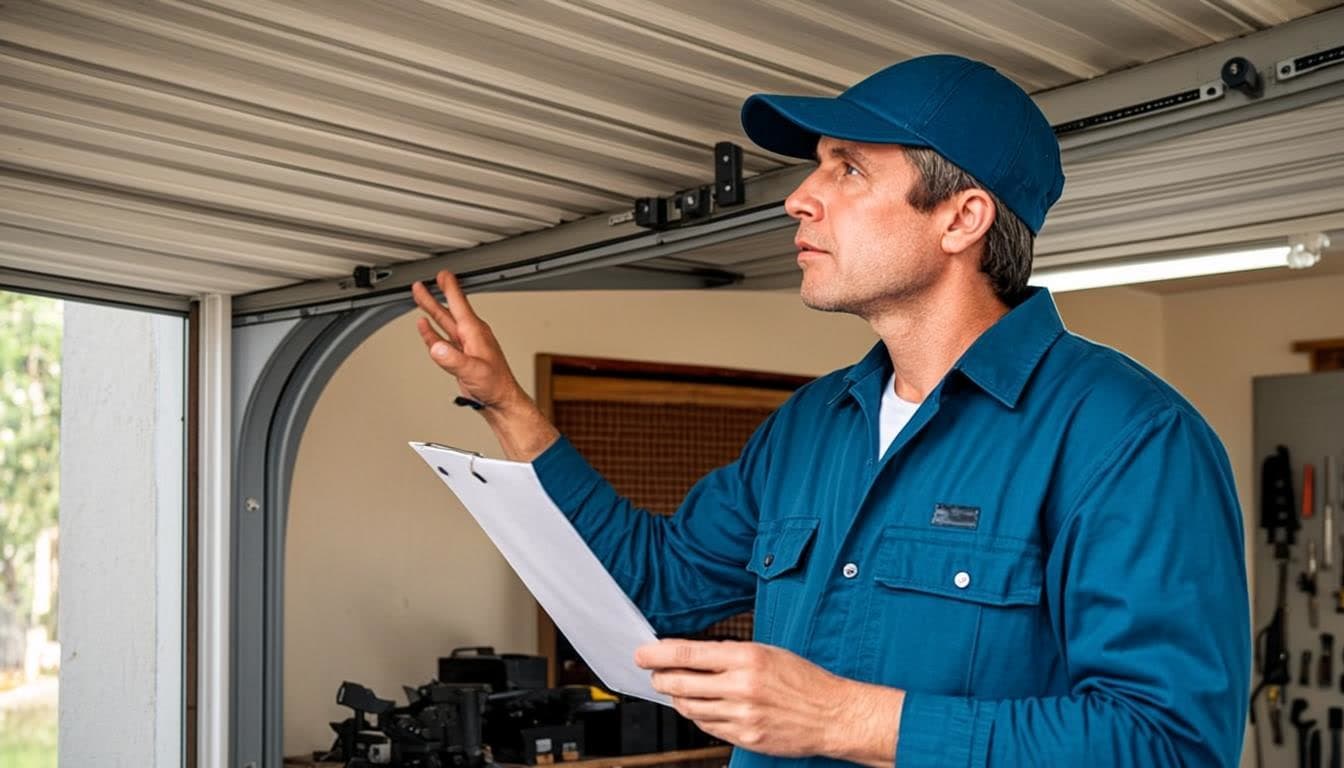
Most emergency calls start as a squeak three months earlier. Professional garage door maintenance in Toronto catches that squeak while it's still a lubrication point — not a snapped spring or a burned-out opener. One visit a year: 21 points of inspection, lubrication and balance testing, door to opener — and the printed checklist is yours to keep.
Prevention beats the emergency: a tune-up takes about an hour on a morning you choose. The emergency it prevents — a spring snapping on the coldest night of the year — takes an evening and an after-hours crew. Book before the bang.
Dispatchers answering now
The annual pass, at a glance
- Scope
- 21 points, door to opener
- Time on site
- 60–90 min, most doors
- You keep
- Printed checklist + photos
- Reply time
- 3–5 min, online
Toronto timing tip: book October–November, before the first deep freeze — that's when fatigued springs snap.
No contracts — book one visit or a seasonal plan.
The Checklist
What a 21-Point Tune-Up Includes
Every garage door tune up in Toronto we run follows the same route — 21 points, door to opener, in the same order every visit.
Springs & hardware
The counterweight system — where the big failures start.
- Spring tension test — raised halfway, the door must hold steady without drifting.
- Spring coil inspection — rust, stretch and early gaps, photographed for the record.
- Centre bearing service — shaft bearings inspected and lubricated, worn units flagged.
- Hinge inspection — every hinge checked for cracks, play and pin-hole wear.
- Hardware torquing — hinge screws and lag bolts tightened to spec.
- Lubrication pass — springs, hinges and bearings get silicone or white lithium — never WD-40.
Cables & rollers
Wear items that make doors loud before they make them stuck.
- Lift cable inspection — fraying, rust rings and off-drum winding caught early.
- Cable drum check — winding grooves and drum-to-shaft fit verified.
- Roller inspection — every wheel checked for flat spots, chips and wobble.
- Roller service — grinding wheels lubricated and retested, damaged ones flagged.
- Bottom bracket check — lift-cable anchors torqued, cables seated true.
Track & alignment
The rails the whole system rides on — alignment is everything.
- Track alignment check — vertical and horizontal rails verified parallel and plumb.
- Track mounting — brackets and wall anchors torqued.
- Track cleaning — salt grit and debris cleared from the rails.
- Binding-point search — spots where the door sticks or drags, found and marked.
Opener & safety
The motor plus the systems that keep a moving door safe.
- Opener force test — up and down force set so the door stops on resistance.
- Travel-limit adjustment — endpoints set so the door closes and seats fully.
- Drive & gear check — chain or belt tension set, gear wear flagged.
- Photo-eye alignment — safety sensors aimed and verified across the opening.
- Auto-reverse test — the door must reverse on contact with a paper-towel roll.
- Manual release exercise — the emergency cord disengages and re-engages cleanly.
You keep the checklist. Every visit ends with the printed 21-point report — photos of anything flagged — so next year starts from records, not guesswork. Points 16 through 21 are the garage door safety inspection proper: photo-eyes, auto-reverse, manual release.
Wear Mechanics
Why Doors Fail Between Tune-Ups
Nothing fails without warning — it fails on a schedule, set by three countdowns every Toronto door is running.
The cycle countdown
Springs are rated for a fixed number of open-close cycles — 10,000 to 20,000 for torsion, roughly half that for extension. At two to four cycles a day, that's 7 to 15 years; every cycle after is borrowed time.
Road-salt corrosion
Salt spray follows every car into the garage and settles on tracks, cables and spring coils, roughing surfaces and eating at the steel — lakefront and laneway doors rust fastest. The rinse-and-lube pass resets it.
Thermal swings
A Toronto year runs from deep freeze to heat wave. Metal expands and contracts through every swing, fasteners loosen, and cold-thickened lubricant makes springs and opener work harder for the same lift.

Garage door maintenance in Toronto is about reading those countdowns while the fix is still an adjustment — not an emergency. Book the reading.
Pre-Winter Pass · October–November
Garage Door Winterization in Toronto: The Pre-Winter Pass
The first hard freeze is when fatigued springs snap and frozen seals bond doors to driveways. Booked in October or November, the winterization visit is four checks between your door and a February emergency:
Weather-seal check
Bottom and side seals inspected for gaps, brittleness and compression — a torn seal lets meltwater and January drafts into the garage.
Cold-rated lubrication
Standard lubricant thickens as temperatures drop; the fall visit re-lubricates with a product that keeps its viscosity below freezing.
Ice-jam prevention
Refrozen meltwater bonds the bottom seal to the driveway; we check the seal profile and clear the drainage path so the door never freezes down.
Pre-winter timing
October–November slots book out first every year — booking early keeps the visit a planned stop, not an emergency dispatch.
Same-Day Process
The Same-Day Maintenance Visit, Step by Step
Booked before noon, most tune-ups happen the same day. About an hour on site, five steps, door back in service tested and documented.
Send the request
Describe the door — age, symptoms, single or double — in the online form. A dispatcher replies in 3–5 minutes with slots.
The 21-point inspection
The technician works door to opener through the printed checklist: springs, cables, rollers, tracks, opener, safety systems.
Lubrication & adjustments
Every moving part is lubricated, then you see the checklist results and confirm the tier before adjusting begins.
Safety tests
Balance, photo-eyes, auto-reverse and manual release verified before the door returns to daily service.
Checklist handover
The printed report — photos of anything flagged — is yours; approve work on the day and the fee is credited in full.
Priced by Scope
What Sets the Cost of a Maintenance Visit
So — what does garage door maintenance cost? Scope, not a fixed rate: the quote follows the checklist and never pads it. Four factors set the scope:
| Factor | Priced by | Notes |
|---|---|---|
| Door age | Pre-1990 hardware needs more of the 21 points adjusted — and usually the faster cadence | Older doors get the most from the premium tier |
| Door condition | A silent door passes clean; a grinding one adds roller and bearing scope | Flagged points become quoted work you approve first |
| Points needing adjustment | The inspection itself is fixed; the adjusting is the variable | Quoted line by line from the printed checklist |
| Single vs pair of doors | Two doors share one visit and one dispatch | The second door adds scope, not a second trip |
Booking
Book Your Maintenance Visit
One visit, about an hour, and a documented baseline for every year after:
- Standard or premium confirmed on site — you see the 21-point checklist before you choose
- The printed checklist is yours either way
- Repair credit applies on the spot if you approve work
- Same-day slots most days across the GTA
- October–November requests get pre-winter priority
Booking for a door that's already complaining — squealing, slow, jerky? Say so in the notes and the tech arrives with rollers and hardware on the truck.
Request Free Service Estimate
Tell us about your garage door issue. We will get back to you with an estimate. Usual reply time: 3-5 minutes.
Maintenance Plans
Annual or Bi-Annual: Plans by Scope
Most homes settle into one of two rhythms. The plans differ by visit count and scope — never by fine print:
Annual Plan
One visit a year
- The full 21-point pass each year — inspection, lubrication, spring tension, safety tests
- Pre-winter priority — your October–November slot held early
- Checklists archived year over year — wear trends show
- Tune-up fee credited to any repair you approve
Best for: doors under ten years old, no symptoms
Bi-Annual PlanMost booked
Two visits a year
- Everything in Annual, plus a second seasonal visit
- Fall: full 21-point pass with the winterization checks
- Spring: salt rinse, seal check, re-lubrication
- Same repair-credit policy on both visits
Best for: pre-1990 doors, lakefront corrosion zones, six-plus cycles a day
Not sure which? The technician sets the baseline from the first visit's checklist — the cadence follows the hardware, not the calendar. Start with one visit.
Straight Answers
Garage Door Maintenance FAQs
The questions Toronto homeowners ask most about maintenance — cadence first, because that's the search that brought you here.
Coverage
Maintenance & Tune-Ups Across the GTA
Same 21-point pass, same printed checklist, same-day slots — technicians cover every Toronto neighbourhood daily.
Also covering East York, Don Mills, Leaside, High Park and Markham. Not sure if you're in range? Send a request — if you're in the GTA, we're on the way.
Same-day slots · printed checklist
Catch It While It's Still a Squeak
A squeak today is a snapped spring on the coldest night of the year. One visit, 21 points, about an hour — and a balanced, documented door going into winter. Describe your door in the online form for a free, exact assessment; reply time is usually 3–5 minutes.
Same-day slots most days · printed 21-point checklist included · tune-up fee credited to any repair you approve