
24/7 Emergency Garage Door Repair — Greater Toronto Area (GTA)

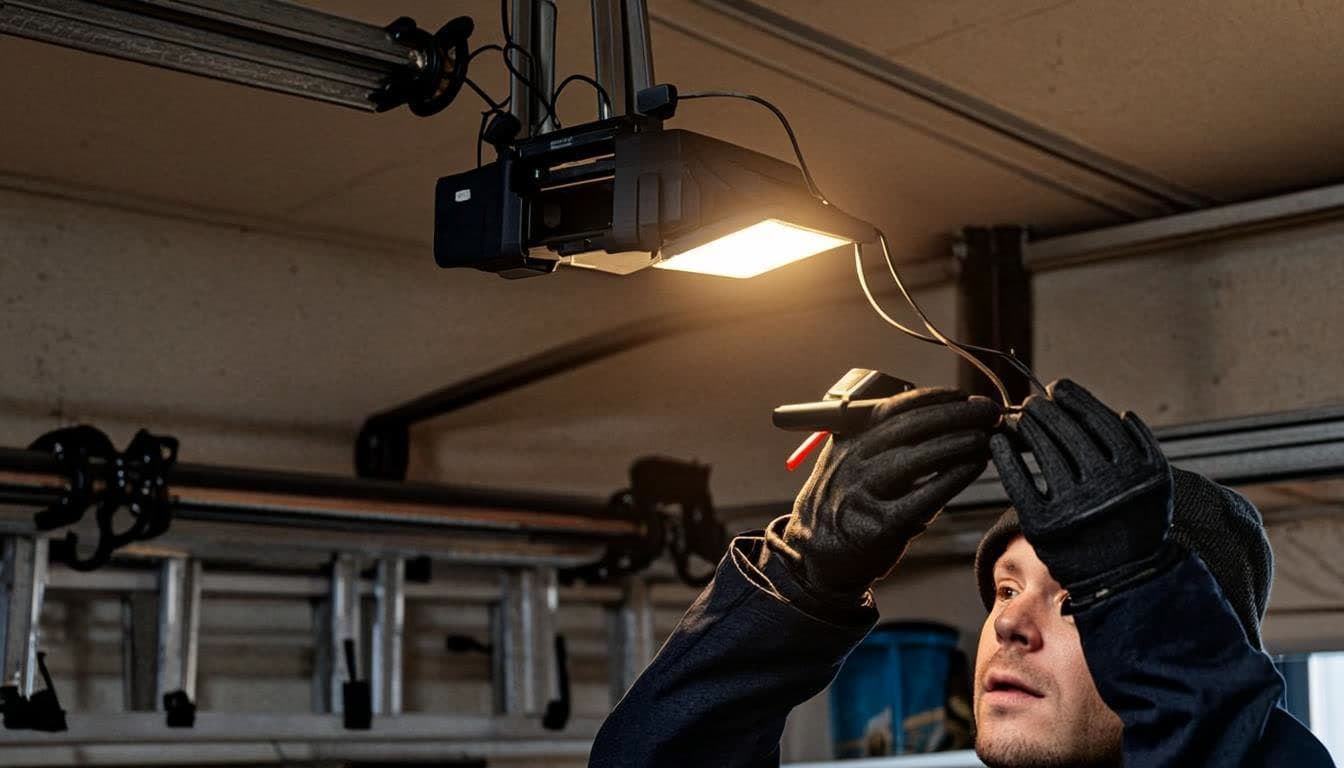
A technician servicing a garage door opener motor and rail above a residential door, with the photo-eye safety sensors on the tracks below

Fix-It Guide · Toronto Edition

Why Won't My Garage Door Close? 6 Causes & Fixes

The door travels down, stops halfway — and goes right back up, opener light flashing. In Toronto service calls, a garage door that won't close is usually a five-minute sensor fix once you know which cause you're dealing with. Below: the 6 causes ranked, the 2-minute sensor check that clears most of them, and what each fix involves.

Last updated September 2026By Marcus Delaney, Lead Service Technician · 14 years on GTA garage doors

Stuck open right now? A door that won't close is a security problem, not a convenience one. Tell us what the LEDs are doing — a dispatcher usually names the cause within 3–5 minutes.

Request Service

Quick Answer

Quick Answer: Why Won't My Garage Door Close?

In Toronto service calls, a garage door that won't close is most often the photo-eye safety beam — misaligned, obscured by leaves or snow, or knocked off its bracket (roughly 6 of 10 won't-close repair calls). Beyond the beam: down-limit drift, a bent track, or weakened springs the opener reads as an obstruction.

The 6 causes of a garage door that won't close, with tell-tale signs and whether each is DIY-safe
CauseTell-tale signDIY-safe?
1. Misaligned or dirty photo-eye sensorsDoor reverses and the opener light flashesYes
2. Something in the door's pathDoor stops partway down on a clear-looking floorYes
3. Nicked or pinched sensor wiringReversal comes and goes with the door's positionNo — call
4. Down-limit switch driftedDoor reverses just above the floor, nothing blocking itYes
5. Bent track or jammed rollerDoor scrapes or binds one-sided mid-travelNo — call
6. Weak or imbalanced springsDoor strains, slows, then gives upNo — call

The Usual Suspect

Why the Photo-Eyes Cause Most 'Won't Close' Calls

The system is simple — and it's working even when your door isn't.

Two fist-size units face each other across the opening, one on each vertical track, both mounted 4–6 inches off the floor. One sends an invisible beam; the other catches it. Anything that breaks the line — a leaf, a snow drift, a bike tire — and the opener sends the door back up instead of finishing the close.

That reversal is a feature, not a fault. The failures come from the units losing each other:

Knocked brackets

Snow shovels, bikes backing out, a bin clipped in the dark — the units sit 4–6 inches off the floor, exactly where everything hits.

Winter film & webs

Salt-dust film and spider webs across the lens are a Toronto-winter specialty — the beam weakens just enough to drop out mid-cycle.

Low sun glare

A low winter sun down the driveway can blind the receiver at exactly the hour you come home. It reads as a blocked beam.

Nicked bell wire

The low-voltage wire staples along the track; shelving installs and years of vibration pinch it until the signal cuts out.

What the lights are telling you

Two indicator sets tell the story: the LEDs on the sensor units themselves, and the opener's light after a failed cycle.

  • Steady glow, both unitsBeam locked — the sensors are fine
  • Blinking or flickeringMisaligned or obscured — run the 2-minute fix
  • Opener light: 1 blinkSafety sensor wiring
  • Opener light: 2 blinksSensor wires shorted
  • Opener light: 4 blinksPhoto-eyes misaligned or blocked
  • Opener light: 5 blinksMotor overheated — unplug, wait 30 min
  • Opener light: 6 blinksMotor circuit failure — service call
  • Blinks continuouslyLogic board or receiver fault

Flash patterns cover common LiftMaster / Chamberlain / Craftsman openers — check your manual for brand variants.

When a sensor needs more than a swivel

Wiring splices, bracket re-mounts, a full pair replacement — that's the daily bread of our garage door opener repair in Toronto crews. Sensor pairs for LiftMaster, Chamberlain and Genie ride on every truck, and the fix is usually a first-visit job.

A stripped white nylon garage door opener drive gear next to a replacement gear-and-sprocket kit
Opener parts stocked on every truck

Diagnosis

The 6 Causes, Most to Least Common

Ranked by our 2026 GTA call-out records — each cause gets its own breakdown below.

1

Misaligned or dirty photo-eye sensors

The door starts down, stops — mid-travel or immediately — and travels back up while the opener light flashes. Usually a lens needs a wipe or a unit has been nudged off aim; both LEDs holding a steady glow again is the entire fix (the walkthrough below takes two minutes).

Door reverses and the opener light flashes

DIY-safe: the 2-minute walkthrough below usually clears it — start there.

2

Something in the door's path (or on the threshold)

A rolled toy, a leaf pile, a snow drift. The Toronto angle: January thaws push wind-blown drifts across the threshold, where they refreeze into ridges. One Scarborough call-out last winter was an ice ridge invisible from the car — perfect photo-eyes, a door correctly refusing to crush it. Twenty minutes with a plastic scraper and it closed like new.

Door stops partway down on a clear-looking floor

DIY-safe: clear the threshold to bare concrete and re-test — the sensors were doing their job.

3

Nicked or pinched sensor wiring

Vibration wears the low-voltage bell wire where it staples along the track — often after shelving goes up nearby. The giveaway: intermittent reversal that changes with the door's position.

Reversal comes and goes with the door's position

Professional repair: a quick splice and re-route of the bell wire — low-voltage work, but on a moving assembly.

4

Down-limit switch drifted

The door goes back up before it touches the floor because the opener 'thinks' it arrived early. The fix is a one-turn adjustment on the limit screw — DIY-safe on most models.

Door reverses just above the floor, nothing blocking it

DIY-safe: one turn on the limit screw, then re-test — the cost section covers the pro scope.

5

Bent track or jammed roller

The door binds partway down, usually one side, and the opener reads the drag as an obstruction. Warning: forcing it bends the rails further and pops rollers out — tonight's wobble becomes next week's repair.

Door scrapes or binds one-sided mid-travel

Professional repair only: track and roller work is our garage door off track repair in Toronto specialty — forcing the door only bends the rails further.

6

Weak or imbalanced springs

A fatigued spring makes the door heavy, and the opener's force sensor reverses rather than fight it. Balance test: with the opener released, a door held half-open should stay there. If it drifts down hard, the springs are done.

Door strains, slows, then gives up

Professional repair only: the spring system stays off-limits — that's garage door spring repair in Toronto territory, never a DIY.

Free & Safe

Adjust the Sensors Yourself (2-Minute Fix)

If there's one garage door won't close sensor fix worth learning, it's this one — no tools, no ladder, nothing near the spring.

The setup, pictured in words: two fist-size units sit opposite each other on the vertical tracks, 4–6 inches off the floor — one sends the beam across the opening, the other catches it. Each has a small LED on its inside edge. That beam line is everything you're about to fix.

1

Read the LEDs on both units

Kneel beside either photo-eye — the fist-size unit on the vertical track, 4–6 inches off the floor. A steady glow means it holds the beam; a blinking LED means it has lost it.

Blinking = you've found the cause

2

Swivel until the glow holds steady

The units pivot on their brackets. Swivel the blinking one until its LED locks steady — not flickering. A stiff wing nut yields to a quarter-turn by hand; snug it back afterwards.

Micro-adjustments, not big sweeps

3

Repeat on the other side

Same check on the opposite unit. Both LEDs steady means the beam is locked across the opening — the alignment the opener needs to finish the close.

Both steady = beam locked

4

Prove it with a cardboard box

Place a box in the door's path and press the button — the door must reverse on contact. That's the auto-reverse proving itself.

The UL 325 contact test — passed

LEDs won't hold steady, even clean and swivelled? The beam isn't the problem. Check the bell wire along the track for nicks (cause 3), or book a sensor pair replacement through the quote form below — a stocked-truck job measured in minutes.

2026 Toronto Pricing

What It Costs to Fix (Toronto, 2026)

Garage door won't close repair in Toronto is priced by the failed part and the visit scope — every row below traces to our 2026 job records.

What sets the cost of fixing a garage door that won't close in Toronto, 2026
FixPriced by (installed)
Sensor re-alignmentVisit scope — often included with any same-day service call
Photo-eye pair replacementBrand & model — standard vs premium LiftMaster / Genie — plus bracket and wiring condition
Down-limit adjustmentService-visit basis and opener brand — screw access differs by model
Track straighteningNumber of bends, roller damage and realignment time
Spring pair replacementSpring type, cycle rating, door weight and one-vs-pair scope

After-hours dispatch carries a flat surcharge — quoted before the truck rolls, never added after.

Honesty line: quotes should be itemised in writing before work starts. Ours always are.

Most won't-close fixes — sensor work, limit adjustments, wiring — land under our garage door opener repair in Toronto service: same-day crews, written quote first, parts on the truck.

Request Free Service Estimate

Tell us about your garage door issue. We will get back to you with an estimate. Usual reply time: 3-5 minutes.

Licensed & insured · Upfront pricing · No spam, ever

Non-Negotiable

Safety Rule: Never Bypass the Sensors

Safety sensors are the federally-mandated auto-reverse system (UL 325) that stops the door on a child or pet. Never bypass, tape over or rewire around them to force the door closed — adjust or replace them instead.

The rule exists because doors once closed on children and pets. Taping an eye or bridging the wires disables the only system that stops a 200-lb moving door — and can void opener warranties and insurance claims. Sensors that won't hold alignment are a same-visit fix.

Book a sensor fix

Straight Answers

Garage Door Won't Close: FAQs

The reversing question first — it's the one Toronto homeowners ask most.

Stocked trucks · sensor fixes on the first visit, most days

Door Won't Close Tonight? We Fix Most on the First Visit.

Tell us what the LEDs are doing — steady, blinking or dark — and the dispatcher will name the likely cause before booking. Every quote is itemised in writing first, priced by the failed part.

Reviewed by Priya Nair, Senior Technician · Facts verified last updated september 2026 against our 2026 job records.