24/7 Emergency Garage Door Repair — Greater Toronto Area (GTA)

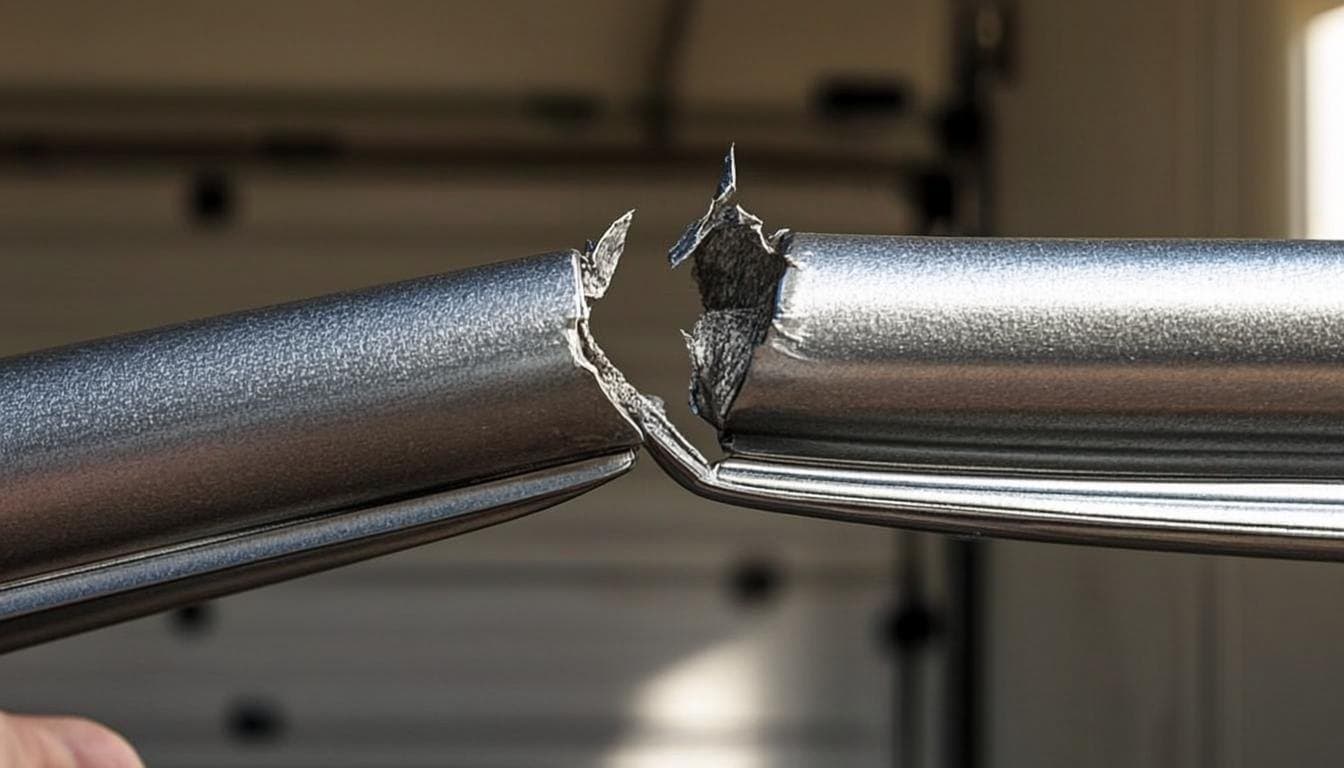
A snapped garage door torsion spring above a residential door, showing the visible gap between the broken coils

Fix-It Guide · Toronto Edition

Garage Door Won't Stay Down: 5 Causes & Fixes

The door touches the floor, seems to settle — then floats back open, an inch or a foot. The garage door won't stay down fix that lasts starts with one question: does it come back immediately, or later? Below: the 5 causes ranked, the two-branch decision tree, and the two adjustments that are safe to try yourself.

Last updated September 2026By Marcus Delaney, Lead Service Technician · 14 years on GTA garage doors

Drifting open right now? Tell us which branch you're on — pops back on contact, or creeps open later. A dispatcher usually names the cause within 3–5 minutes, and the fix is often two quarter-turns.

Request Service

Quick Answer

Quick Answer: Why Won't My Garage Door Stay Down?

In Toronto service calls, a garage door that won't stay down is most often uneven spring tension — one spring fatigued past its partner, so the door fights itself at the floor. Beyond that: a down-force setting too light, a down-limit set past the floor, worn springs that can't hold the door seated, or track friction that's made the door 'heavier'. Different failure from a garage door that won't close all the way — this one finishes the close and loses it. Adjustments are billed as a standard service visit; spring work is priced by spring type, cycle rating and door weight.

The 5 causes of a garage door that won't stay down, with tell-tale signs and whether each is DIY-safe
CauseTell-tale signDIY-safe?
1. Uneven spring tension — the #1 causePops back the moment it seats · door sits crooked at restNo — call
2. Opener down-force set too lightReverses right at the floor, worse in cold weatherYes
3. Down-limit set past the floorDoor touches, strains, then bounces back upYes
4. Worn springs that can't hold it downCreeps back open minutes or hours after closingNo — call
5. Track friction making the door 'heavier'Stiff, scraping final foot of travelNo — call

The Decision Tree

First: Which Reversal Do You Have?

Precision is the whole game — most repair sites blur 'won't close' and 'won't stay down', but they're different failures with different fixes.

Watch one full cycle — door in view, opener light in view — and note the exact moment it comes back. The timing is the diagnosis: a door that reverses on contact is fighting its settings or its springs; one that creeps open minutes or hours later never truly finished its close.

The fork

Does it come back the moment it seats — or minutes to hours later?

Branch A

It comes back immediately

The door reverses the moment it seats — or just before it touches. That's the door fighting its own settings or its springs: tension pulling unevenly, or a force setting that gives up on contact.

Suspects, in order:

  • #1 — Uneven spring tension
  • #2 — Down-force set too light
  • #3 — Down-limit set past the floor

A settings & tension fight — try the two-adjustment fix

Branch B

It creeps back later — minutes or hours

The door closes, seats, looks finished — then drifts open an inch or a foot. The close never truly ended: a limit that has drifted, or springs that no longer hold the door seated.

Suspects, in order:

  • #4 — Worn springs that can't hold it down
  • A limit that's drifted — door stops just short of closed
  • #5 — Track friction changing the door's weight

Drift & imbalance — confirm with the balance test below

10s

The 10-second balance test

Close the door fully, pull the red emergency-release handle, and lift the door by hand to halfway. A balanced door holds — the problem is settings. A door that drifts either way has a spring problem, and the knobs won't save it. If the door feels heavy or wants to crash down as you lift, re-latch and skip the test: that's your answer.

Drifts either way = springs — stop adjusting

When the answer is the opener, not the door

Force knobs, limit switches, logic boards — that's the daily bread of our garage door opener repair in Toronto crews. Adjustment visits are same-day, and the two knobs are the first thing every tech reaches for.

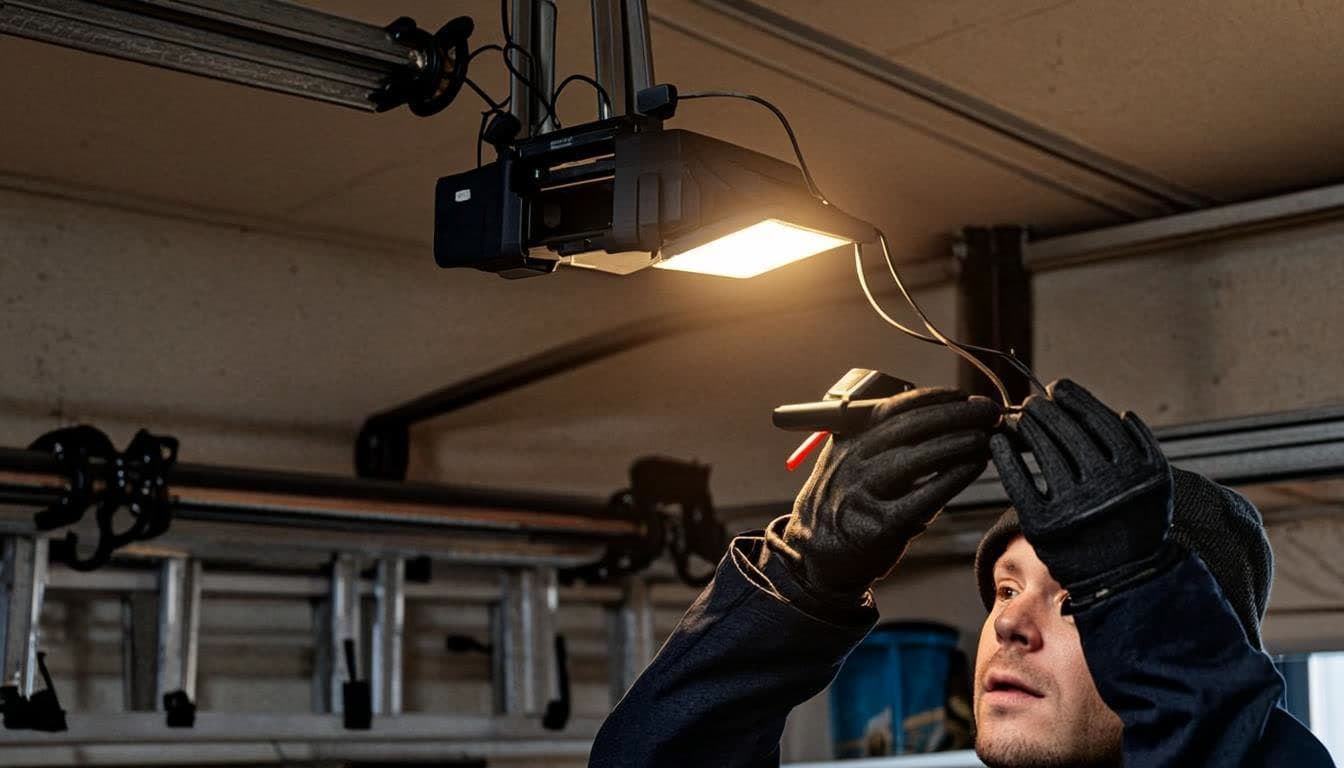
A technician servicing a garage door opener motor and rail above a residential door
Force and limit controls live on the opener motor unit

Diagnosis

The 5 Causes, Most to Least Common

Ranked by our 2026 GTA call-out records — each cause gets its own breakdown below.

1

Uneven spring tension — the #1 cause

Two springs share one job, but they rarely age in lockstep: one fatigues a season ahead of the other and the door starts closing a fraction crooked. The heavy side settles, the light side lifts, and the opener reads the tug-of-war as an obstruction — the door pops back the moment it seats. The balance test in the decision tree confirms it.

Pops back the moment it seats · door sits crooked at rest

Professional repair only: tensioned springs are off-limits — that's garage door spring repair in Toronto territory, never a DIY at any setting.

2

Opener down-force set too light

The force sensor decides how hard the door may push before the opener gives up. A setting that was fine in July trips in January — cold grease, aging springs and a new bottom seal all make the door 'feel' heavier through the last inch. Two knobs on the opener motor unit fix it, a quarter-turn at a time.

Reverses right at the floor, worse in cold weather

DIY-safe: the two-adjustment walkthrough below is this fix — quarter-turns, test cycles, three rounds max.

3

Down-limit set past the floor

The limit tells the opener where 'closed' is. Set it past the floor and the opener keeps pushing after the door bottoms out — the door loads against the concrete and rebounds back up, sometimes with an audible bounce. One screw fixes it; if the screw spins without effect, the switch assembly is worn.

Door touches, strains, then bounces back up

DIY-safe: one screw, a quarter-turn at a time — the walkthrough below covers it.

4

Worn springs that can't hold it down

Late in their 10,000-cycle life, springs lose the muscle to keep the door seated square. The close looks finished — then the door drifts, an inch or a foot, as the imbalance slowly wins. If yours creeps open overnight, this and a drifted limit are the two suspects, in that order.

Creeps back open minutes or hours after closing

Professional repair only: same rule as cause #1 — the spring system stays untouched. Book the balance test and let a tech quote the pair.

5

Track friction making the door 'heavier'

Dry, gritty tracks, a slight bend, a fresh thick bottom seal or an asphalt heave at the threshold all add drag through the final foot of travel — the door 'weighs' more than its force setting allows. Cleaning the tracks is DIY-safe; bends, seals and threshold ramps are workshop work.

Stiff, scraping final foot of travel

Professional repair: track, seal and threshold work rides along with a service visit — forcing the door only bends the rails further.

Free & Safe

Safe DIY: The Two-Adjustment Fix

If any garage door won't stay down fix is safe to try yourself, it's this one — two controls, quarter-turn increments, a test cycle between each. Springs stay untouched.

Warning — quarter-turns only: adjust force and limit settings a quarter-turn at a time, with a full cycle between turns, three rounds maximum. And don't keep re-running a reversing door: the auto-reverse is telling you something is wrong. Repeated cycles can burn out the motor or — if the cause is spring tension — drop the door hard. Two attempts to diagnose, then stop and call.

1

Find the two controls

The force and travel-limit screws sit on the back or side of the opener motor unit — two recessed screws under a light plastic cover, marked FORCE and TRAVEL or LIMIT. A stepladder and a flat screwdriver are all you need.

Marked FORCE and LIMIT (or TRAVEL)

2

Force knob: a quarter-turn up

Turn the down-force control one quarter-turn toward more, then run a full cycle. Seats without straining? Done. Still pops back? One more quarter-turn — three rounds maximum, a full test cycle between every turn.

Quarter-turn, cycle, repeat — max three

3

Limit screw: a quarter-turn back

If the door strains or bounces at the floor, back the down-limit off a quarter-turn — less travel — and cycle again. The door should just kiss the concrete, never load against it.

Just kiss the floor — no load

4

Prove it with the box test

Place a cardboard box in the door's path and press the button: the door must reverse on contact. That's the auto-reverse proving you haven't cranked the force past safe.

The UL 325 contact test — passed

Grinding, straining, or three rounds with no change? The cause is mechanical — springs, track or a worn limit assembly. Stop adjusting and describe what you saw in the quote form below; a stocked truck carries all three fixes.

2026 Toronto Pricing

What It Costs to Fix (Toronto, 2026)

Garage door won't stay down repair in Toronto is priced by the failed part and the visit scope — every row below traces to our 2026 job records.

What sets the cost of fixing a garage door that won't stay down in Toronto, 2026
FixPriced by (installed)
Force & limit adjustment visitVisit scope — a standard service call, and often the whole fix
Down-limit switch replacementOpener brand & model — the assembly is quoted on site
Spring re-tension or pair replacementSpring type, cycle rating, door weight and one-vs-pair scope
Track, seal & threshold workTrack bends, seal spec and threshold ramp scope
Annual tune-upDoor size, spring count and hardware condition

After-hours dispatch carries a flat surcharge — quoted before the truck rolls, never added after.

Honesty line: quotes should be itemised in writing before work starts. Ours always are.

Most won't-stay-down fixes — the adjustment visit, limit switches, spring re-tension — land under our garage door opener repair in Toronto service: same-day crews, written quote first, parts on the truck.

The fix that keeps it fixed: an annual garage door maintenance in Toronto visit re-checks force and limit settings, re-balances the door and catches spring fatigue before it leaves you with a 3 a.m. open door.

Request Free Service Estimate

Tell us about your garage door issue. We will get back to you with an estimate. Usual reply time: 3-5 minutes.

Licensed & insured · Upfront pricing · No spam, ever

Security Note

A Door That Won't Stay Closed Is a Door You Can't Lock

A garage door that reverses when closing is a nuisance at noon — at midnight, it's a security issue.

If it won't hold closed tonight, don't trust it. An inch of gap defeats the lock; a foot of gap is an invitation. Lock the man-door between garage and house, take the valuables in — and don't rely on the opener to hold the door. The auto-reverse that popped it open all day will do it again at 3 a.m.

What looks like a garage door that opens by itself after closing is usually drift — but at three in the morning it's indistinguishable from someone forcing it. Crews run 24/7 across the GTA; send a few details and a dispatcher names the likely branch in 3–5 minutes.

Get an emergency quote

Straight Answers

Garage Door Won't Stay Down: FAQs

The DIY question first — it's the one Toronto homeowners ask most.

Stocked trucks · adjustment visits are same-day

Two Knobs or a New Spring? We'll Tell You in One Visit.

Tell us which branch you're on — pops back on contact, or creeps open overnight. Every garage door won't stay down fix starts with that one answer; the dispatcher will name the likely cause before booking, and every quote is itemised in writing first, priced by the failed part.

Reviewed by Priya Nair, Senior Technician · Facts verified last updated september 2026 against our 2026 job records.